Track Tin Supply & Pricing News
Monitor tin supply & pricing across Twitter, Reddit, Telegram, and 10,000+ sources. AI alerts in under 30 seconds.
Latest Tin Supply & Pricing News
About Tin Supply & Pricing
Tin is a critical metal for electronics — over 50% of consumption goes to solder used in semiconductor packaging and circuit board assembly. Supply is concentrated in a few countries, with Indonesia, China, Myanmar, and Peru dominating production. Indonesian export licensing disruptions and Myanmar mine closures have caused severe supply squeezes. Tracking tin requires monitoring both electronics demand cycles and highly concentrated supply sources.
How SentryDock tracks Tin Supply & Pricing
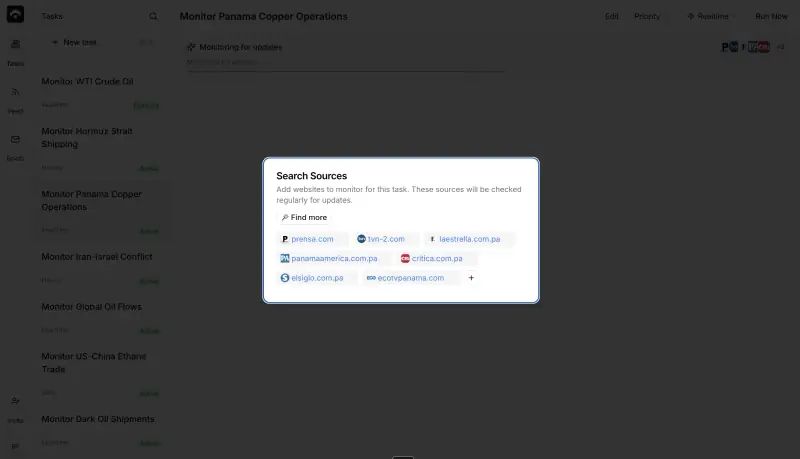
Tell us what you trade. We find the sources.
Trade copper? We find Chilean mining ministry channels. Natural gas? Russian energy officials. Soybeans? Brazilian agriculture sites.
Add your own sources too. Any public site, Telegram, X, Truth Social, or Reddit.
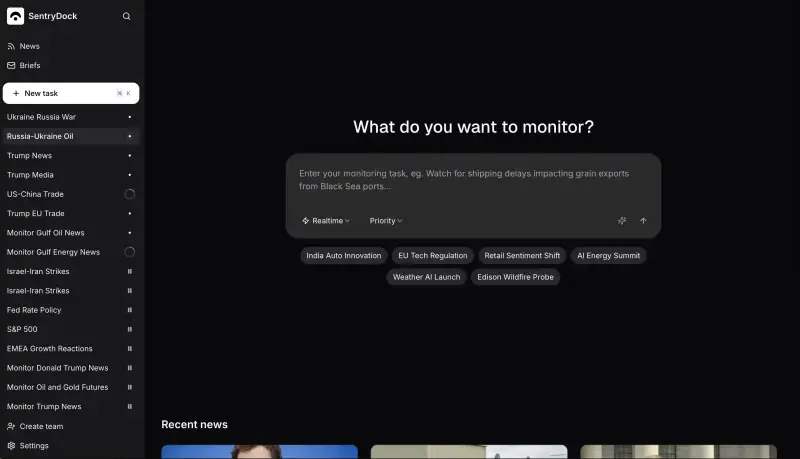
We read 95+ languages. You get English.
We monitor in the original language and translate instantly. Indonesian, Portuguese, Russian, Mandarin. You get a summary in English plus the original source.
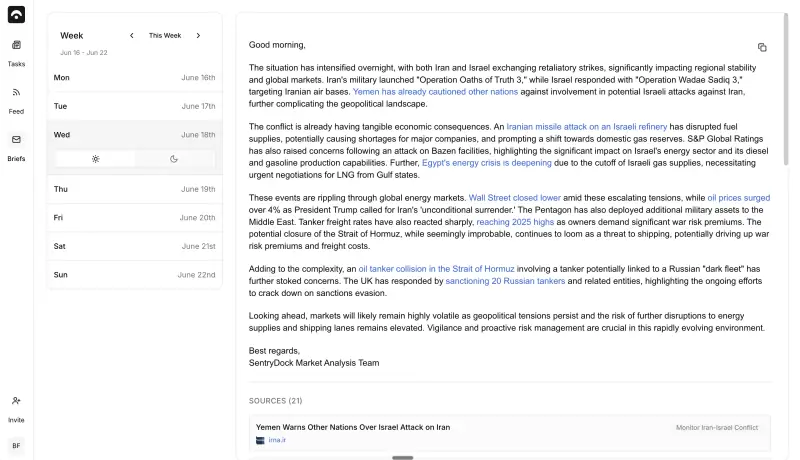
Alerts hit your phone in minutes.
Email, Slack, Teams, or SMS. Pick how you want them. Instant alerts for breaking news or hourly digests if you prefer batches.




AI tells you if it's material.
We analyze each story and predict market impact. Is this worth your attention? Which commodities? Bullish or bearish?
Less noise. Only news that could move your positions.
Related Topics
Frequently asked questions about Tin Supply & Pricing monitoring
Common questions about tracking tin supply & pricing news with SentryDock.